
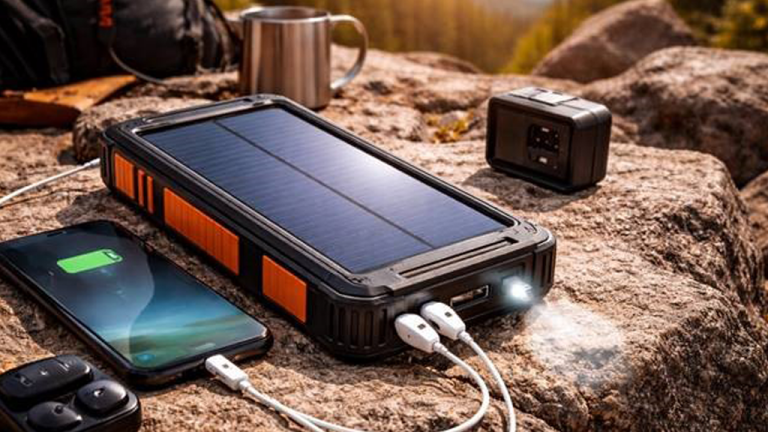
Portable solar power banks are a recent innovation. These devices combine traditional battery storage with solar energy, offering a convenient and eco-friendly way to keep your gadgets charged wherever you are. As we rely more on smartphones, tablets, cameras, and other electronics, the need for reliable portable charging has grown. Portable solar power banks address this by providing a sustainable and flexible energy source, especially when electricity is hard to find. Portable solar power banks work by using rechargeable batteries and built-in solar panels. The battery stores energy collected from sunlight, which you can then use to charge your devices through USB ports. The solar panels let the power bank recharge itself in the sun. This makes them especially useful for outdoor activities, travel, or for people who often experience power outages.
Advantage:
A big advantage of portable solar power banks is that they do not rely on the electrical grid. Whether you are camping, hiking in remote places, or dealing with an emergency, these devices help you keep your important electronics charged. This is especially important for safety, since it lets you keep communication devices powered during emergencies. Besides being practical, portable solar power banks are good for the environment. They use solar energy, which means less dependence on fossil fuels and lower carbon emissions. This makes them a great option for people who care about the environment but still want to use modern technology.
Features
Today’s portable solar power banks come with many useful features. Many have several USB ports so you can charge more than one device at a time. Some offer fast charging, LED lights to show battery levels, and built-in flashlights for nighttime use. They are often made with tough, water-resistant, dustproof, and shockproof materials, making them great for outdoor use.
It is important to know that solar charging is usually slower than charging with electricity. The speed depends on things like sunlight, weather, and the size of the solar panel. Because of this, many people charge their power banks with electricity before going outside and use solar charging as a backup. This way, the device is always ready when you need it.
When choosing a portable solar power bank, there are a few things to consider. Battery capacity, measured in milliampere-hours (mAh), tells you how many times you can charge your devices. Bigger batteries are better for long trips, while smaller ones work well for daily use. You should also consider solar panel efficiency, build quality, weight, and additional features to find what suits you best.
Conclusion
Portable solar power banks are a smart and sustainable way to meet today’s energy needs. They offer flexibility, reliability, and help the environment, making them useful for daily life and outdoor trips. As solar technology gets better, these devices should become even more efficient, affordable, and popular, helping people stay connected while using cleaner energy.