Comparing 1KW and 3KW Solar Panel Systems: Which is Ideal for Your Home? Rising electricity prices and frequent blackouts have made solar power a highly prudent investment for property owners. Nevertheless, choosing between a 1-kW and a 3-kW solar panel system often leaves many individuals perplexed. The optimal decision primarily hinges on your power consumption, financial constraints, and anticipated energy requirements. This blog simplifies the key distinctions, advantages, expenses, and best applications of both systems to help you effortlessly choose the ideal solar solution for your home
What is a 1KW Solar Panel System?
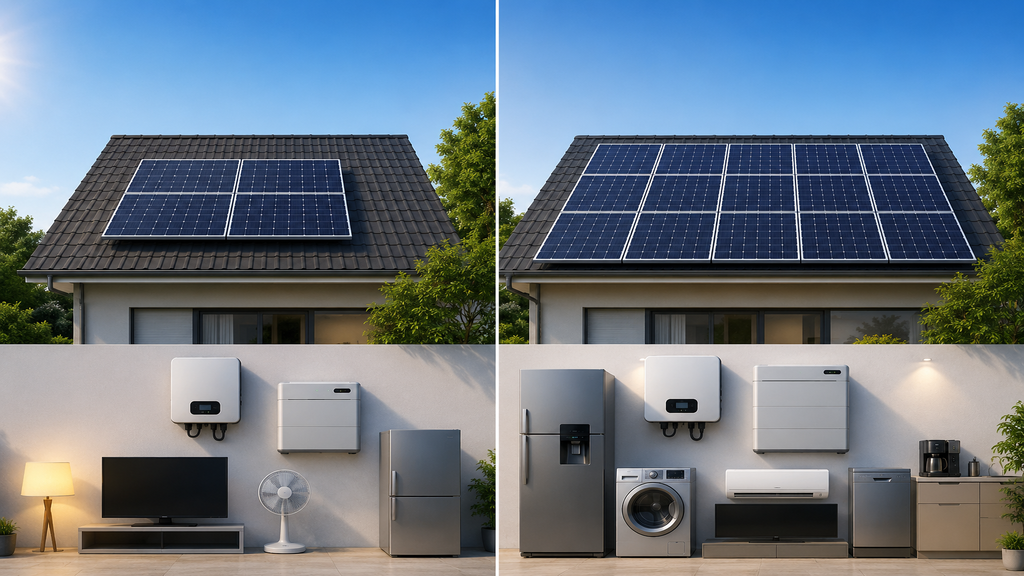
A 1KW solar array is a compact installation intended for minimal power usage. Daily power output ranges from four to five units, contingent upon solar exposure.
This system is ideal for:
- Small families
- Rural homes
- Shops or small offices
- Backup power support
Appliances You Can Run on a 1KW System
- 3–4 ceiling fans
- 5–6 LED lights
- LED TV
- WiFi router
- Laptop and mobile chargers
- Small refrigerator
Advantages of a 1KW Solar System
- Lower installation cost
- Requires less roof space
- Easy maintenance
- Reduces monthly electricity bills
Disadvantages
- Limited power generation
- Not suitable for heavy appliances
- Cannot efficiently run air conditioners or water pumps
What is a 3KW Solar Panel System?
A 3KW solar array is a mid-range solution ideal for households with substantial power demands. It produces approximately 12 to 15 units of electricity each day.
This system is perfect for:
- Medium to large families
- Modern homes with multiple appliances
- Users looking for long-term savings
Appliances You Can Run on a 3KW System
- 8–10 fans
- 15+ LED lights
- Refrigerator
- Television
- Washing machine
- Desktop computer
- Water pump
- 1 small air conditioner
Advantages of a 3KW Solar System
- Higher electricity production
- Supports more appliances
- Greatly reduces electricity bills
- Better long-term investment
- More energy independence
Disadvantages
- Higher installation cost
- Requires larger rooftop space
- Battery backup can increase expenses
1KW vs 3KW Solar Panel System – Key Differences
| Features | 1KW Solar System | 3KW Solar System |
|---|---|---|
| Daily Power Generation | 4–5 Units | 12–15 Units |
| Suitable For | Small Families | Medium/Large Families |
| Installation Cost | Lower | Higher |
| Roof Space Required | Less | More |
| Heavy Appliance Support | Limited | Better |
| AC Support | Not Recommended | Possible |
| Future Expansion | Limited | Easier |
Which Solar System Should You Choose?
The decision between a 1 kW and a 3 kW solar setup hinges on your current power consumption and future needs.
Choose a 1KW Solar System if:
- Your electricity consumption is low
- You live in a small house or apartment
- You want an affordable solar solution
- You only need backup for basic appliances
Choose a 3KW Solar System if:
- Your family uses more electricity
- You want to run multiple appliances
- You plan to use an air conditioner
- You want bigger long-term savings on electricity bills
While the upfront cost of a 3KW system is higher, it yields more energy and delivers superior long-term financial returns

Installation Cost Comparison
The cost of solar systems can vary based on several factors such as the quality of solar panels, the type of inverter used, battery backup capacity, and overall installation setup. As a result, even systems with the same power capacity may differ in price depending on brand, components, and build quality. The price of solar systems can vary depending on panel quality, inverter type, and battery backup.
Estimated Costs:
- 1KW Solar System: Budget-friendly and suitable for beginners
- 3KW Solar System: Higher investment but better performance and savings
Before purchasing, always compare:
- Panel efficiency
- Warranty
- Battery quality
- Installation service
- After-sales support
Conclusion
While both 1KW and 3KW solar setups are strong contenders, the ideal choice hinges on your specific power needs and financial constraints. Small homes with modest power needs benefit from a 1KW setup, whereas larger families seeking sustained savings and enhanced appliance performance are better served by a 3KW system. Opting for a 3KW system is typically the wiser financial choice if you seek a high-performing, future-ready solar setup. Nevertheless, a 1 kW solar setup remains a cost-effective choice for meeting basic everyday needs.
FAQ’s
Frequently Asked Questions