
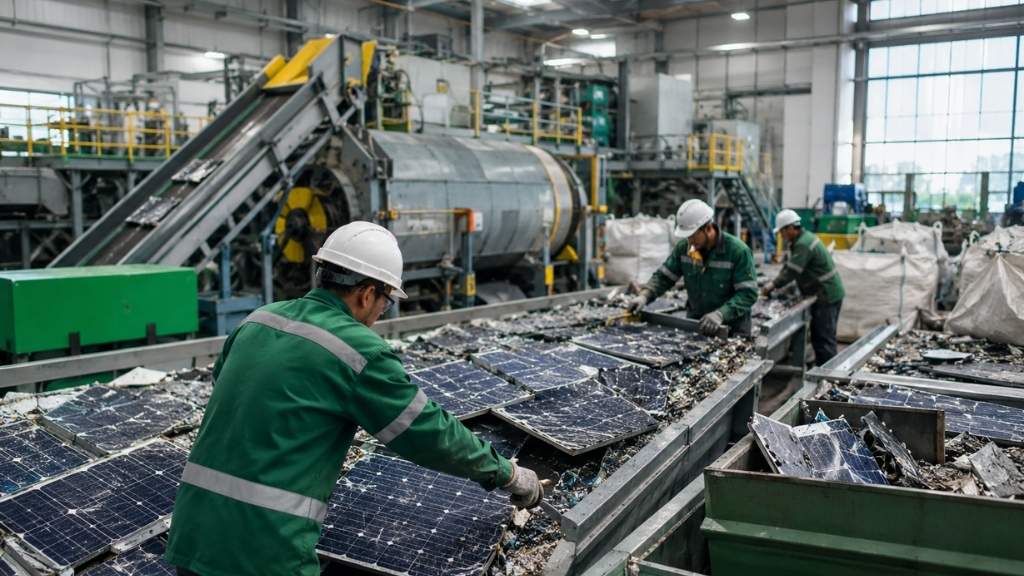
As more businesses and property owners invest in renewable energy, one important question continues to arise: Are solar panels recyclable?
The good news is that most solar panels are recyclable, and the solar industry is continuously improving recycling technologies to recover valuable materials from retired panels. As solar adoption grows worldwide, including in the United States, understanding solar panel recycling is becoming increasingly important for environmentally conscious businesses.
If you’re considering solar energy for your commercial property, understanding whether solar panels are recyclable can help you make a more sustainable investment decision. In this guide, we’ll explain how solar panel recycling works, what materials can be recovered, and why recycling matters for the future of clean energy.
Why Are Solar Panels Recyclable Important for Businesses?
Businesses today face increasing pressure to adopt sustainable practices while managing costs and meeting environmental goals.
Solar energy offers long-term benefits, but companies also want to understand the full lifecycle of solar equipment.
When business owners ask, “Are solar panels recyclable?” they’re often concerned about:
- Environmental responsibility
- Waste management
- Sustainability goals
- Regulatory compliance
- Long-term investment value
Fortunately, modern solar panels contain valuable materials that can often be recovered and reused rather than sent to landfills.
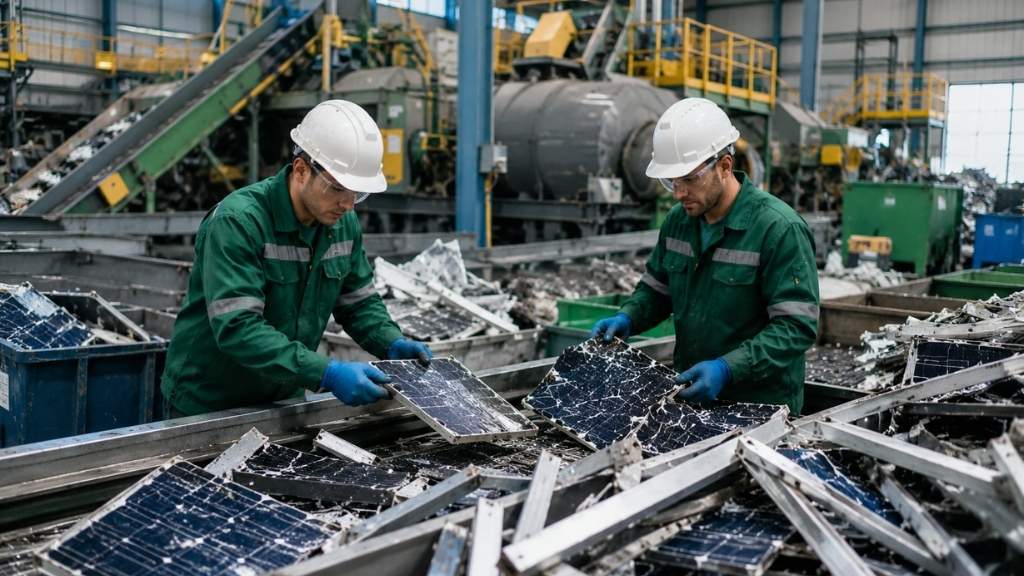
What Materials in Solar Panels Can Be Recycled?
Most solar panels are made from materials that can be recycled and repurposed.
These materials include:
Glass: Glass typically makes up the largest portion of a solar panel. In many cases, up to 70–80% of a panel’s weight consists of glass that can be recovered and reused.
Aluminum Frames: Aluminum frames are highly recyclable and can be melted down and used in new products.
Silicon Cells: The silicon used in solar cells can often be processed and reused in future manufacturing applications.
Copper Wiring: Copper is a valuable material that can be extracted and recycled efficiently.
Other Metals: Small amounts of silver and other metals may also be recovered through specialized recycling processes.
How Solar Panel Recycling Works
Solar panel recycling involves several steps designed to separate and recover valuable materials.
Collection and Transportation: Old or damaged solar panels are collected and transported to a recycling facility.
Frame Removal: The aluminum frame and junction box are removed for separate recycling.
Material Separation: The panel is processed to separate glass, silicon, metals, and plastic components.
Recovery and Reuse: Recovered materials are refined and prepared for reuse in manufacturing and industrial applications.
As recycling technology advances, recovery rates continue to improve.
Benefits of Solar Panel Recycling
Environmental Protection: Recycling helps reduce waste and prevents valuable materials from ending up in landfills.
Resource Conservation: Recovered materials can be reused, reducing the need for raw material extraction.
Lower Carbon Footprint: Using recycled materials often requires less energy than producing new materials from scratch.
Support for the Circular Economy: Recycling promotes a sustainable cycle where materials remain in use for as long as possible.
Enhanced Corporate Sustainability: Businesses can strengthen their environmental initiatives by supporting responsible recycling practices.
Common Challenges in Solar Panel Recycling
While solar panels are recyclable, several challenges still exist.
Limited Recycling Infrastructure: Solar panel recycling facilities are not yet widely available in every region.
Transportation Costs: Moving panels to specialized recycling facilities can add costs.
Complex Material Separation: Some panel components require advanced technology to separate efficiently.
Growing Future Demand: As more solar panels reach the end of their lifespan, recycling systems will need to expand significantly.
Despite these challenges, the solar industry is investing heavily in improved recycling solutions.
How Businesses Can Prepare for Responsible Solar Panel Disposal
Work With Reputable Solar Providers: Choose solar companies that understand the complete lifecycle of solar equipment.
Plan for Long-Term Asset Management: Include end-of-life disposal and recycling considerations when evaluating solar investments.
Maintain Solar Panels Properly: Routine maintenance can extend panel lifespan and improve long-term performance.
Stay Informed About Recycling Programs: Many regions continue to develop new recycling initiatives and regulations.
Are Solar Panels Recyclable and Worth the Investment?
Absolutely.
Modern solar panels typically last 25 to 30 years or longer. During that time, they generate clean electricity, reduce operating costs, and help businesses achieve sustainability goals.
The fact that solar panels are recyclable adds another layer of environmental value to the investment.
When businesses choose solar energy, they are investing in a technology that not only reduces carbon emissions today but also offers opportunities for responsible material recovery in the future.
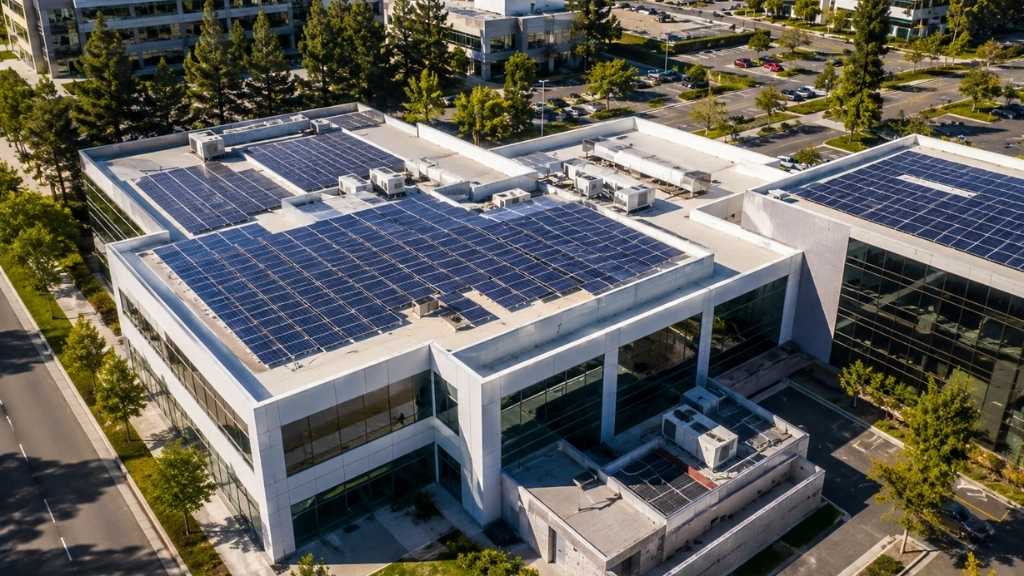
Solar Energy and Sustainable Business Growth
Solar energy is becoming an increasingly important part of business sustainability strategies.
Benefits include:
- Reduced electricity costs
- Greater energy independence
- Improved environmental performance
- Enhanced brand reputation
- Long-term return on investment
Businesses that adopt solar energy today position themselves for a more sustainable future.
Why Choose Professional Solar Energy Solutions?
Implementing a successful solar project requires expertise, quality equipment, and ongoing support.
Whether you’re evaluating system costs, installation requirements, or long-term performance, working with experienced solar professionals can help maximize your investment. Learn more about solar solutions and pricing through our Solar Panel Price Guide. If you’re ready to explore solar energy opportunities for your business, contact our team today.
Conclusion
So, are solar panels recyclable? Yes. Most solar panels contain valuable materials such as glass, aluminum, silicon, and copper that can be recovered and reused through specialized recycling processes. As solar energy adoption continues to grow, recycling will play an increasingly important role in supporting sustainability and resource conservation. For businesses looking to invest in renewable energy, solar panels remain one of the most practical and environmentally responsible solutions available today.