
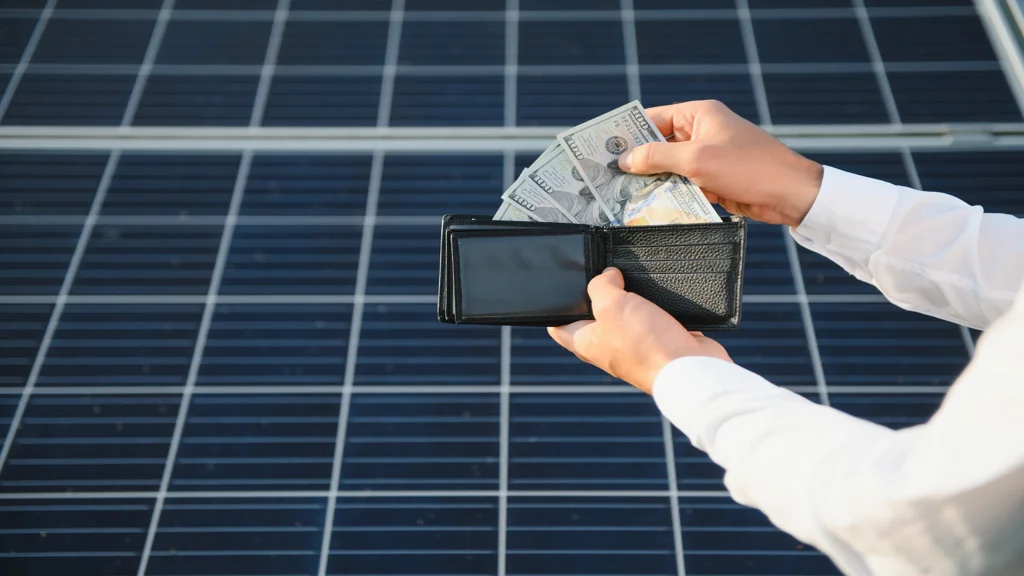
Over the past few years, solar energy has been the most discussed topic in Bangladesh, as rising electricity costs, power insecurity, and environmental issues have prompted more households and companies to consider installing rooftop solar panels. Many people are currently asking simple yet meaningful questions, such as: Why are solar panels so costly in Bangladesh? How efficient are these panels, and how much electricity can they generate? Would they be worth the investment in an ordinary home or shop? And the most practical of all possible questions: How much do solar panels cost at all in this place?
This group of topics will help you appreciate solar power through the eyes of Bangladesh, beginning with price and technology (efficiency) and moving on to cost effectiveness and long-term savings. Not only does it describe the figures on the bill, but it also discusses the practical pros and cons of solar energy usage in a country such as Bangladesh, where space, sunlight, and government policies all have significant influence.
Solar panel prices in Bangladesh remain comparatively high because companies import nearly all major components, such as the panels, inverters, and racks, have to be imported, and also due to the import duty, depreciation of currency, and poor local production, which drives the cost up to the consumer. Add to this inconsistent land-use policies, high grid connection fees, and a lack of transparency in project contracts for large-scale solar facilities, which continue to make the cost per unit of solar energy in the country very high compared to neighboring countries such as India.
Import dependence and duties:
Large-scale solar panels are not yet manufactured in Bangladesh, meaning manufacturers have to import modules, inverters, cables, and mounting systems. The government applies customs duty, VAT, and licensing fees to these imported products
Land and grid connection costs:
Bangladesh has limited and expensive flat land suitable for solar farms, and developers usually build solar farms on riverbanks or in remote areas, which adds to land and grid connection costs. Connecting these plants to the national grid requires additional transmission lines and infrastructure, which increases the project’s total cost charged to consumers.
Depreciation and financing load:
The depreciation of the Taka against the dollar increases the foreign exchange cost of imported equipment, and in most cases, developers are forced to borrow at high interest rates, both of which affect the effective price of each unit of solar power. These economic strains manifest as high tariffs on grid-scale solar and higher initial costs for rooftop systems on homes and factories.

How much are solar panels?
Solar‑panel prices depend on quality, brand, and system size, but you can think in two simple ways: per‑panel price and per‑kW system price.
Typical rooftop solar panels in the local market typically cost:
- Small panels (around 100–150 W): about 4,000–7,000 each.
- Medium panels (250–330 W): about 7,000–22,000 each, depending on brand and efficiency.
- High-power panels (500 W and higher): approximately 14,000-22,000 and more for quality brands such as Jinko, Trina, or REC.
Very inexpensive or very expensive panels (to 100 or to 1,000,000) are not standard-size household panels; rather, they are small charging pads or large commercial modules.
The cost of a complete rooftop solar system.
To install a typical home or small office in Bangladesh, companies usually calculate the overall price according to system size (kW):
- 1 kW system (approximately 3-4 panels): the cost is approximately 80,000-170,000, based on panel type, inverter brand, battery, and installation.
- 5-5 kW (fan, fridge, TV, lights, occasionally AC): approximately 140,000 – 370,000 with batteries and installation of full packages, including hybrid.
- Big homes or small factories. Larger systems (10 to 20 kW) may commence around 10 lakh (1,000,000) and upwards.

What is the efficiency of solar panels?
Solar panel efficiency describes how effectively a panel converts sunlight into usable electricity. The average efficiency of the most common rooftop and utility-scale solar panels in Bangladesh is between 15% and 20%, meaning that, under ideal conditions, for every 100 watts of sunlight hitting the panel, about 15-20 watts are converted into electricity.
Typical efficiency levels
Average commercial panels (Bangladesh market)
The majority of entry-level to mid-range panels sold in Bangladesh have efficiencies ranging between 15% and 18%, which is sufficient to reduce electricity bills considerably without making the price too high.
Higher-end or premium panels
There are higher cost, high-performance panels that may achieve up to approximately 19% to 21% efficiency, generating more power in the same area of the roof, a practical consideration when space is a problem.
Why is efficiency important in Bangladesh?
Higher-efficiency panels produce more kilowatt-hours per square meter, which is beneficial when rooftop space is limited or you need to meet more needs with fewer panels. But efficiency is not the only consideration; dust, shading, panel angle, and the amount of local sunlight also affect the power a system actually puts out in Bangladesh. Tell me whether this is a school project, a blog post, or a presentation, and I can rewrite it in a simpler or more formal style to suit the purpose.

Are solar panels worth it?
Many people consider solar panels expensive because the overall cost includes far more than the panels alone. A complete solar energy system requires inverters, batteries, wiring, mounting structures, permits, transportation, and professional installation. Manufacturers build high-quality solar panels with advanced technology and durable materials so they can withstand different weather conditions and continue producing electricity for decades.
In many regions, taxes, import duties, and labor charges also increase the final price. Although the upfront investment may seem high, manufacturers design solar panels to reduce electricity expenses over a long period of time. Most systems last between 20 and 30 years, allowing homeowners to save money on monthly utility bills while using renewable energy. In areas with strong sunlight, the savings can become significant over the years and may eventually cover the initial installation cost. Solar energy also reduces dependence on traditional power sources and helps lower environmental pollution.
In addition, homes with solar systems may gain higher property value because energy-efficient features are increasingly attractive to buyers. For many people, solar panels are not only an environmentally friendly choice but also a smart long-term financial investment despite the high starting cost.
Conclusion
Finally, the solar panels in Bangladesh remain quite costly, primarily due to the need to import them, pay taxes and duties, and incur additional expenses for installation, land, and grid connection. The current solar panels, however, are fairly efficient, typically 15-20 percent, and can generate a usable quantity of electricity on an average-sized roof. Many homes and businesses now find solar energy more economical with high electricity bills and sufficient roof space, as most systems recover their installation costs within about 4–7 years and then continue to provide low-cost or free power for several years more.
The cost of a solar system will vary according to the size of the panel, the brand, the inverter quality, and whether you use batteries, but a small 1-3 kW home system is likely to cost between 80,000 and 370,000. All in all, solar energy in Bangladesh is not yet ideal, but it is a viable and more affordable alternative to reduce bills and prepare a cleaner energy future.
FAQ’s
